
Headphones or Earbuds Hurting Your Ears? Causes and Fixes
Headphones and earbuds usually hurt because of pressure: the frame squeezing your head, pads pressing on your ears, or an earbud tip that is too big or sits too deep. Wearing them for hours without a break adds to it.
This guide helps you work out where the pressure comes from and what to try, from free adjustments to replacement pads and tips. It covers comfort and fit, not medical advice.
How we researched this
We don’t test headphones or earbuds ourselves. The advice comes from Apple’s support page on AirPods Pro ear tips, RTINGS’s published comfort tests, SoundGuys reviews and a medically reviewed Healthline article. Comfort differs from person to person, so a fix that worked for a reviewer may not work for you. See the full method.
Quick answer
Take the headphones or earbuds off and give your ears a break first. Then match the fix to where it hurts. For over-ear and on-ear headphones, the usual causes are a tight frame, a heavy pair, or thin pads, so try a looser or lighter pair or thicker pads. For earbuds, the usual causes are a tip that is too large, an earbud pushed in too deep, or wearing them too long, so try a smaller tip and take breaks. If your ears hurt when you are not wearing headphones, or the pain does not go away, see a doctor.
Where does it hurt, and what is the likely cause?
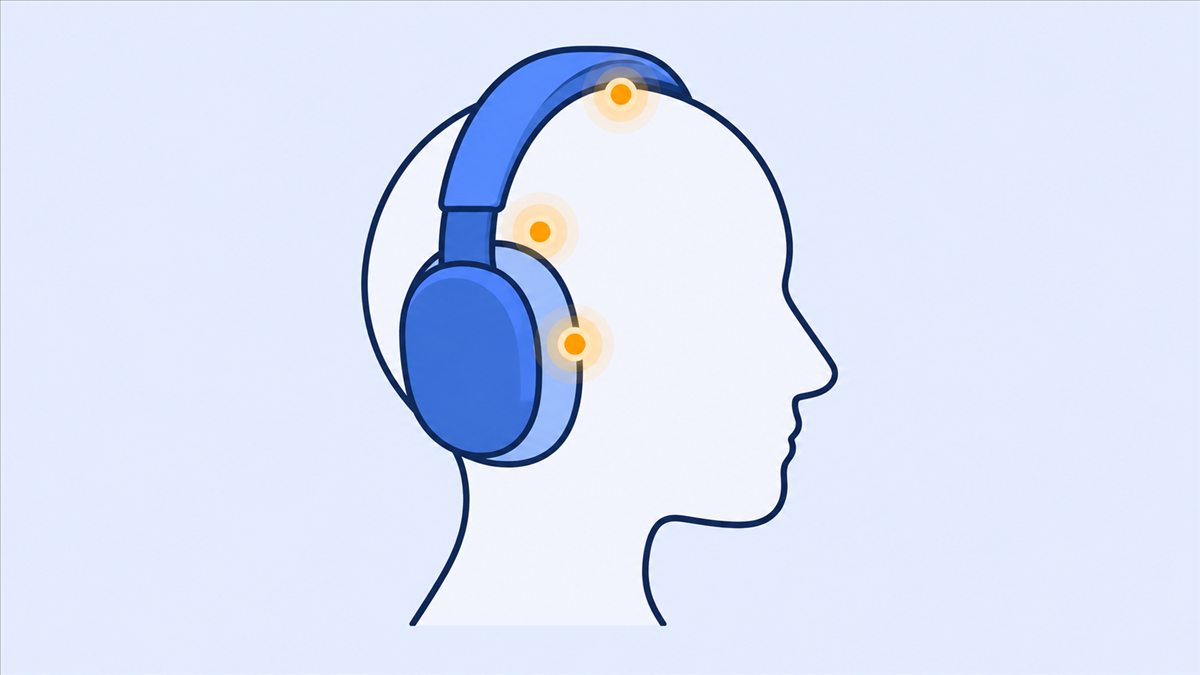
RTINGS, which tests headphone comfort, says comfortable headphones should not cause stress, fatigue or pain even after long use, and that comfort varies between people. Use this table to match the pain to a likely cause.
| Where it hurts | Likely cause | What to try |
|---|---|---|
| Top of your head | A heavy pair or thin padding under the headband | A lighter pair, or thicker headband padding |
| Sides of your head | A tight frame (clamping force) | A looser pair, or one with an adjustable fit |
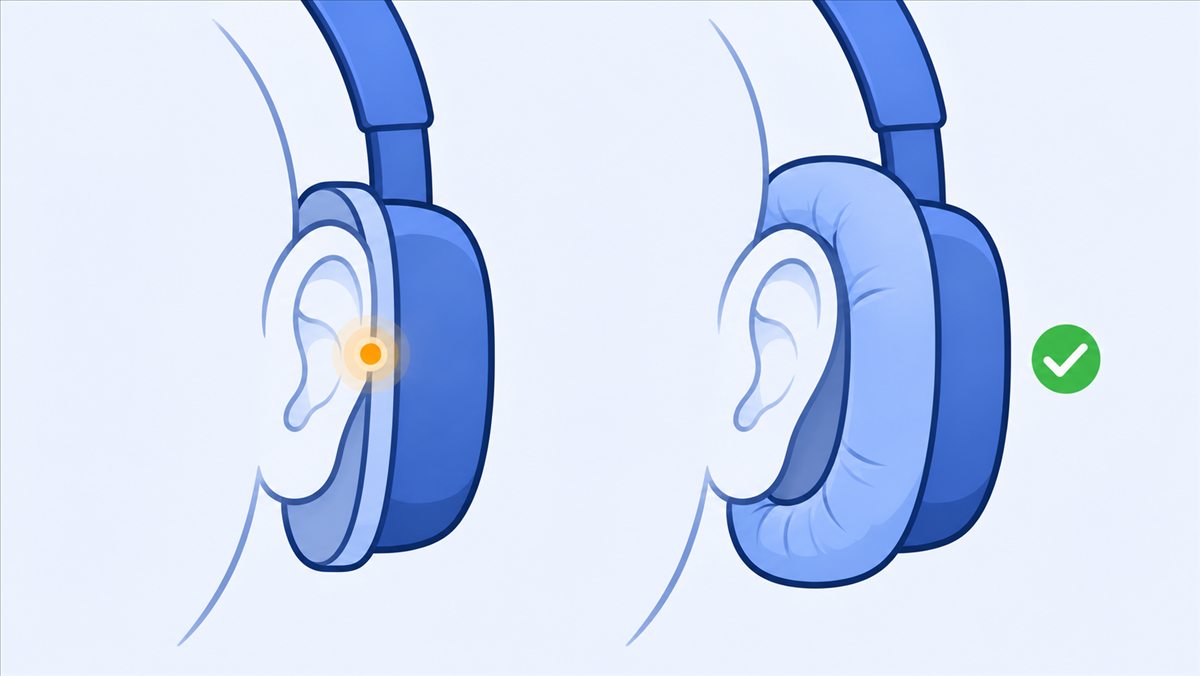
| Around the ears (over-ear) | Shallow or firm pads that press on your ears | Thicker, softer pads, where replacements exist |
| On the ears (on-ear) | The cups rest directly on your ears | An over-ear style, which is typically more comfortable |
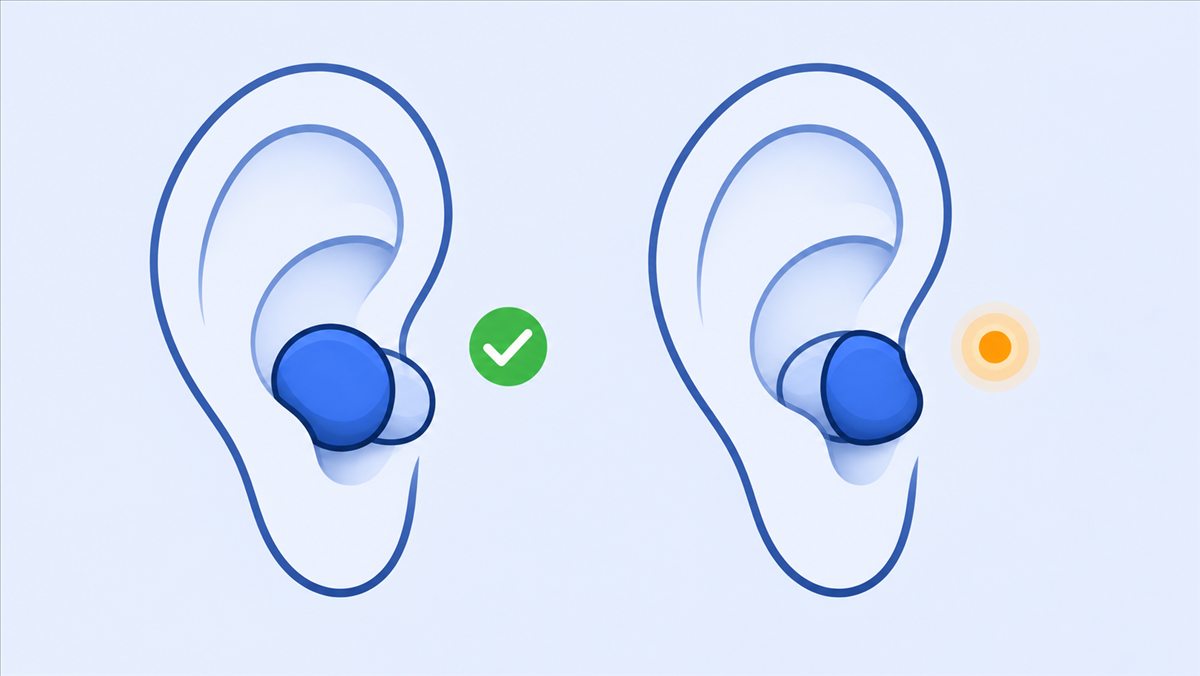
| Inside the ear (earbuds) | A tip that is too large, or an earbud pushed in too deep | A smaller tip, and a gentle seal at the ear canal opening |
| After an hour or more | Long sessions without a break | A short break every 90 minutes |
Why do headphones hurt my ears? Over-ear and on-ear causes
For headphones with a headband, RTINGS says weight, padding, headband tension and frame tightness shape how comfortable they are, especially over long sessions.
- Clamping force. This is how hard the frame squeezes your head. RTINGS says a tighter pair can become uncomfortable or cause pain and soreness during long listening sessions. It adds that the measured number ignores how large the pad is, so it is not the same as the pressure you feel, and that people with different head shapes feel tightness differently.
- Weight. RTINGS treats a pair under 0.55 pounds as light and over 0.75 pounds as heavy, and says lighter headphones generally press less on the top of your head. It also says even heavy headphones can be comfortable with ample padding, and that a light pair with stiff padding can be uncomfortable.
- Padding. RTINGS says the best padding feels dense, thick, plush and even, and that leather, velour and microfiber usually feel best, while mesh fabric, foam or plastic can be coarser and more irritating.
- Shallow pads. A SoundGuys reviewer found that the stock pads on the Sony WH-1000XM6 compress quickly and leave little room for the ears, so the ears press against the inside of the cup and heat builds up. The reviewer swapped in thicker third-party memory foam pads and found them more comfortable, with no change in sound or noise canceling. The reviewer also notes that the maker sells no alternative pad sizes for that model.
- On-ear cups. SoundGuys says that, typically, on-ear headphones are less comfortable and clamp harder than over-ear ones, though there are exceptions.
What to try with over-ear and on-ear headphones
- Take them off for a few minutes. If the pain eases, pressure from wearing them is the likely cause.
- Adjust the headband and cups so the pads sit evenly around your ears, not on top of them. RTINGS counts adjustability as part of comfort.
- Check whether your model has replacement pads. Thicker, softer pads helped the SoundGuys reviewer above, but pads are not made for every model.
- If an on-ear pair presses on your ears, consider an over-ear pair instead.
- If the frame squeezes your head, a looser or lighter pair is the fix. RTINGS says the ideal pair fits securely without feeling too tight.
If you wear glasses, the arms of the glasses can add pressure behind the ears. See our guide to headphones for glasses wearers.
If your headphones feel too big for your head, see our guide to headphones for small heads.
Why do earbuds hurt my ears?
RTINGS says comfort in earbuds depends on how soft and flexible they are, how deep they reach into the ear canal and how much pressure they put on the ear. A medically reviewed Healthline article from 2020 gives three common reasons for earbud pain: how they are placed, how they fit and how long you wear them. It says earbuds are meant to make a gentle seal at the entrance of the ear canal and not to sit inside the canal.
- The tip is too large or too firm. Apple says that if an ear tip feels too large or uncomfortable, you should try a smaller one, and that you might need different sizes for your left and right ears. Healthline suggests trying the next size down.
- The earbud is pushed in too deep. Aim for a gentle seal at the opening, as Healthline describes.
- Hard plastic against the ear. RTINGS says soft, flexible tips tend to be more comfortable, though rigid plastic designs can feel nice too, and that it is generally best to have more than one tip option, such as foam as well as silicone.
For help choosing a tip and getting a secure fit, see our guide to earbuds that keep falling out.
Why do AirPods hurt my ears?
The same causes apply. AirPods Pro come with three to five tip sizes depending on the model, and Apple says the Ear Tip Fit Test (AirPods Pro 1 and 2) or Acoustic Seal Test (AirPods Pro 3) can help you choose. Open Settings, tap Bluetooth, tap the More Info button next to your AirPods, then tap the test and follow the prompts. If the test suggests a different tip, adjust the AirPods and test again, then try another size.
Standard AirPods have no tips, so there is nothing to resize. RTINGS describes AirPods as a rigid design, and says rigid plastic can feel fine for some ears. If they hurt, try the break and placement advice here, or a different style of earbud.
Take breaks, especially with earbuds
Healthline says using AirPods for more than 90 minutes at a time may cause aching, and suggests taking them out every 90 minutes and resting your ears for at least 5 to 10 minutes. RTINGS makes a similar point for all headphones: comfort matters most over long listening sessions.
When to stop and see a doctor
This guide is about fit and comfort. If your ears hurt when you are not wearing headphones, or the pain does not go away after you change the fit and take breaks, stop using them and see a doctor. If one pair hurts quickly and nothing you adjust helps, it may simply not suit your ears, and a different style may.
How we research
For this guide we used Apple’s support page, RTINGS’s published comfort tests, SoundGuys reviews and a medically reviewed Healthline article. We do not test headphones or earbuds ourselves, and we say when evidence is thin. Comfort is personal, so reviewers’ experiences may not match yours. This guide is not medical advice.
Frequently asked questions
Why do headphones hurt my ears?
Usually pressure. RTINGS says weight, padding and how tightly the frame clamps can cause soreness during long listening sessions. For earbuds, a tip that is too large or sits too deep, or wearing them for a long time, are the common causes.
Why do my ears hurt after wearing headphones for a while?
Pressure builds up over a long session. RTINGS says comfort matters most during long sessions, and Healthline suggests a break of at least 5 to 10 minutes after every 90 minutes of earbud use.
Do on-ear headphones hurt more than over-ear?
Often, though not always. SoundGuys says that, typically, on-ear headphones are less comfortable and clamp harder than over-ear ones, with some exceptions.
Why do AirPods hurt my ears?
Healthline lists placement, fit and wearing time. Apple says to try a smaller tip if a tip feels too large, and its fit test on AirPods Pro helps you choose a size.
Can thicker ear pads help?
They helped one SoundGuys reviewer whose stock pads compressed quickly and pressed on the ears. Replacement pads are not available for every model.
When should I see a doctor about ear pain from headphones?
If your ears hurt when you are not wearing headphones, or the pain does not go away after you change the fit and take breaks, see a doctor.
Written by